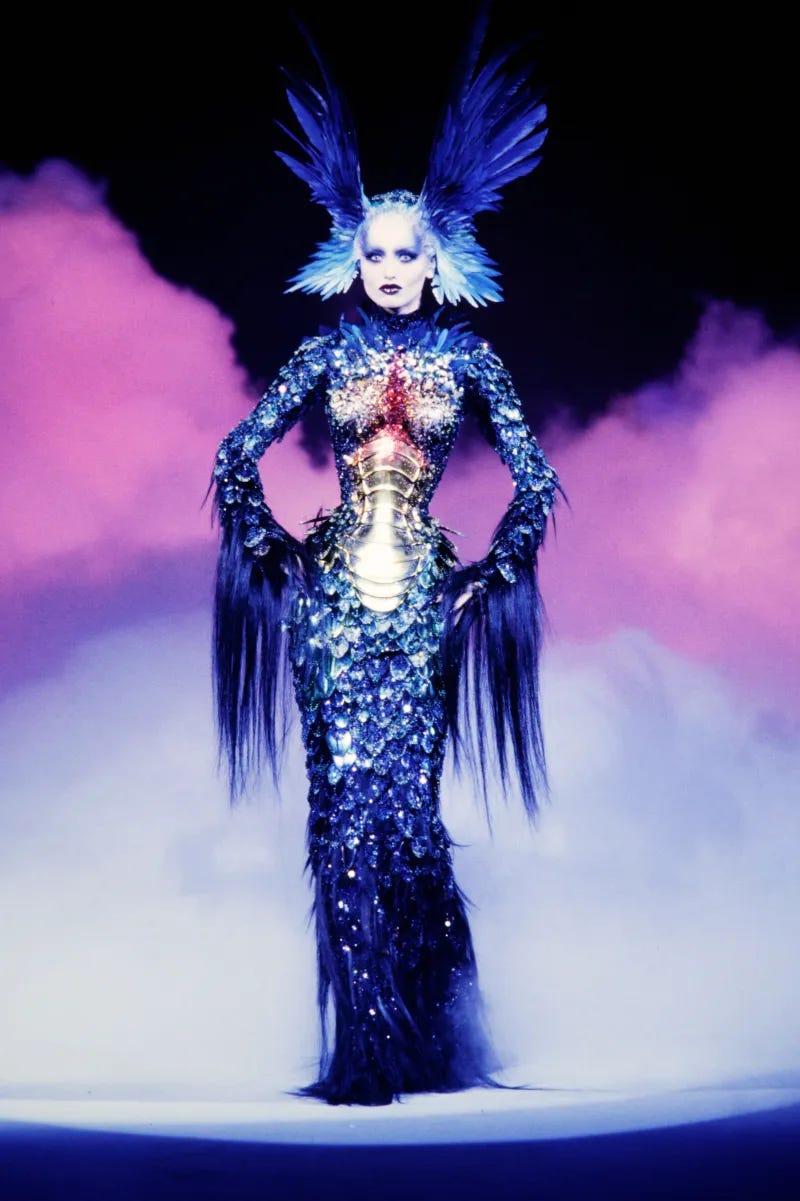
As Pride Month comes to a close, we haven’t been able to stop thinking about how much the queer community does for us at The Nest. Not just in the human interactions we are privileged to be a part of, but in the influence the community has on our work. Fashion would not be as free, impactful, or creative without centuries of work done by the community. From secret codes to ballrooms, The Nest wants to send off Pride with a look back at some of the most important contributions the queer community has made in fashion.
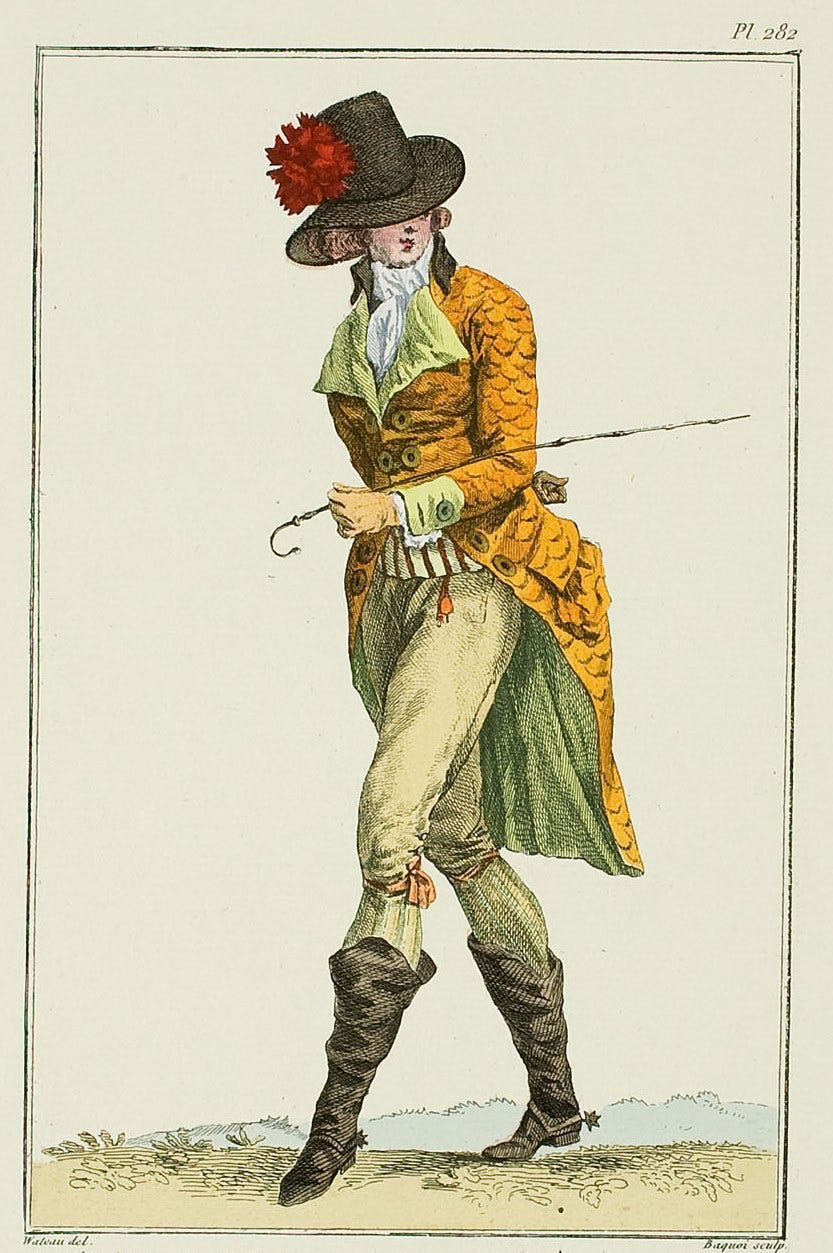
While we know queer-coded fashion dates all the way back to ancient Greece and beyond, we have a very detailed history of it from the past 300 years. The 18th century saw a slightly more accepting society for queer men despite homosexuality remaining illegal at the time. This slight acceptance led to the development of queer subculture in London centered around “molly houses.” Molly houses were essentially gay bars and were home to some of the earliest renditions of drag races. This community began the trend of subtle effeminate and cross dressing in London. By the mid-1700’s, effeminately dressed men began emerging in some more popular media, such as “The Fine Gentleman” from David Garrick’s play Lethe. The 1770s saw the establishment of a significant queer cultural figure: the Macaroni. Derived from the Macaroni Club, the Macaroni was characterized by large powdered wigs with tiny hats, face powder, rouge, and elaborate (and often frilly) suits. The Macaroni became a frequent figure in mainstream culture, often appearing in ceramic arts, music, popular press, and theater.
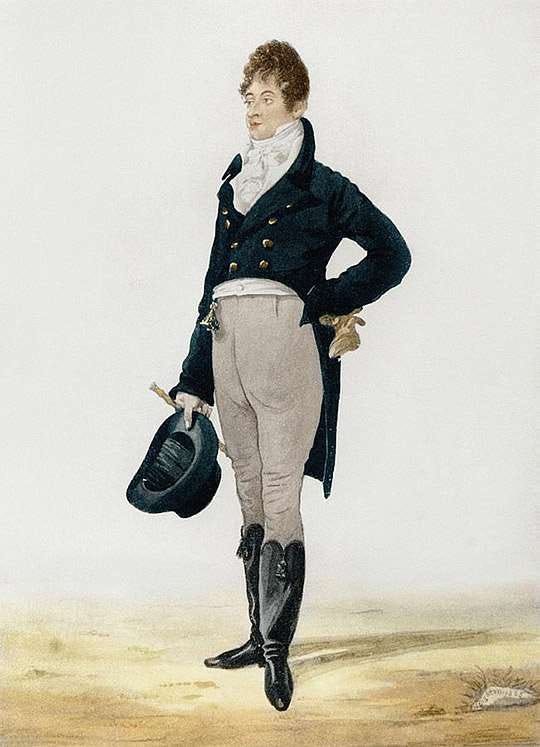
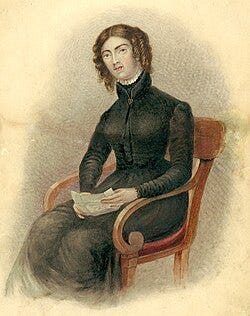
The 19th century returned to a very strict definition of gender norms, reestablishing the masculine man and feminine woman as the only acceptable gender expressions. During this time, the Macaroni evolved into something new: the Dandy. While dandyism came from the Macaroni movement, Beau Brummell is often coined as the father of dandyism. Dandyism emerged as a statement against the overly-lavish aristocratic style of the 18th century, the style defined by meticulous tailoring, simple suits, and statement accessories. Dandyism served as a subtle tool for self-expression. The 19th century also brought the birth of the butch. Many women began subtly dressing more masculine, such as accessorizing with men’s top hats. Anne Lister, a wealthy landowner from England, was one of the most prominent women of influence in the lesbian community. Anne famously had many romantic affairs with women, and her wealth and professional status gave her more room to dress masculine. She is widely regarded as the first modern lesbian.
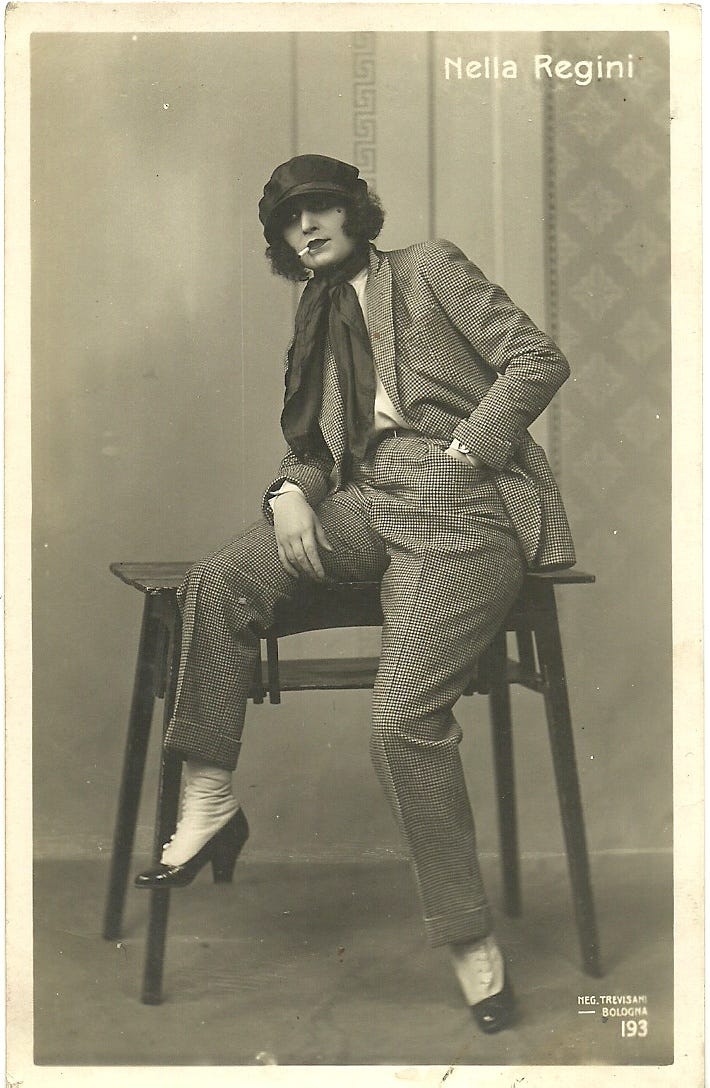
Both dandyism and the rise of masculine dressing in the lesbian community carried over into the 20th century. The dandy was notably adopted by the black community in America, particularly rooted in the Harlem Renaissance in the 1920s. While not explicitly queer in this movement, dandyism held true to its roots as a powerful form of peaceful rebellion. The 1920s also saw what is arguably the most transformative era of lesbian fashion. As mainstream women’s fashion shifted towards simple silhouettes and “boyish” looks, queer women were more freely able to express themselves. The line between men’s and women’s fashion blurred, and women often dressed fully masculine to attend nightlife events. During the early 20th century, drag balls were also operating as a popular underground entertainment form, bringing crowds in the thousands. The mid-20th century saw an unfortunate turn towards maximum suppression and strict gender norms post World War II, but a significant shift happened after the Stonewall Riots of 1969. Prior to Stonewall, much of the queer community attempted to hide their sexual identity. After the riots, an explosion of self-expression and outward defiance resulted in a pivotal period of influential fashion. Queer style of this time, mixed with influence from other subcultures like the punk movement, evolved into what we know today as modern queer fashion. Think Azzedine Alaia’s power dressing and the riot grrrl movement of the 90s. The 1980s also gave us the golden age of ballroom. Modern ballroom was founded by queer black and latino communities who were outcast from their homes. The ballroom was a vital institution for many members of the queer community, providing not just a safe space for self expression, but also a support network that often resulted in found families in the form of Houses. Since the 80s, ballroom has had a significant impact on pop culture and luxury fashion. Modern fashion would be unrecognizable if not for voguing, ballroom-style catwalks, drag makeup…essentially every aspect of the ballroom is now seen in mainstream fashion and culture. This direct connection was clearly prevalent in 90s high fashion. From Mugler to Alaia to Alexander McQueen, the runways of the 90s mirrored the New York City ballrooms.
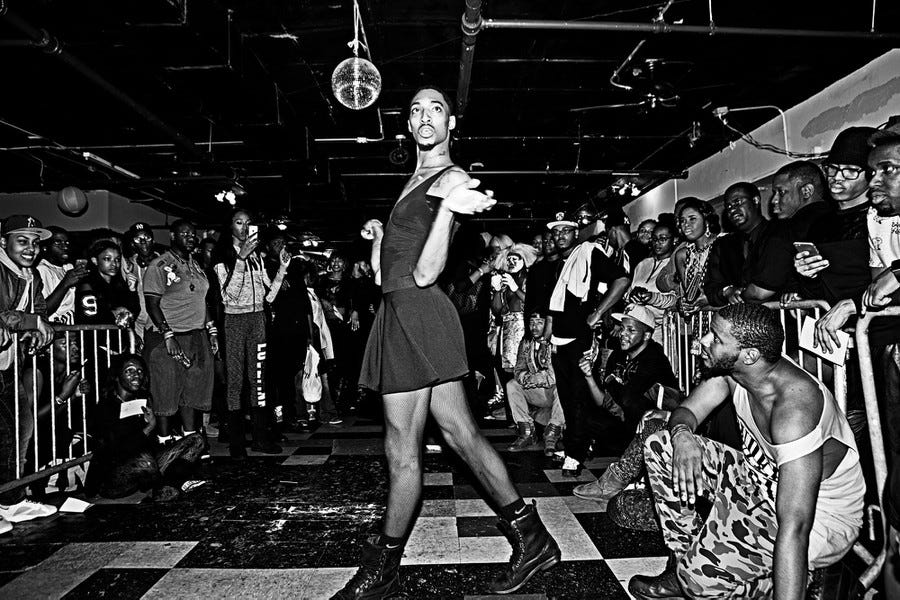
Since the start of the 2000s, queer culture has been so deeply embedded in mainstream pop culture and fashion that many people often forget the two were once separated. This influence began more than 300 years ago and will continue to create change in culture until humans are wiped off the earth. The Nest appreciates this influence everyday, and we hope all of you Nesties do too.